An independent English magazine on Venetian mirrors, Murano glass and the workshop craft behind them, from the sixteenth century furnaces to the mirrored console in a modern room.
Venetian mirrors, the glass of Murano and the craft behind them
Venetian Mirrors, Murano Glass and Craft
Start with the sections
Four guides, from the furnace to the hallway
Each section opens with an index of its articles. Begin with the history and the craft, then the styles and the practical side of owning a mirror.
 01
01History and Origins
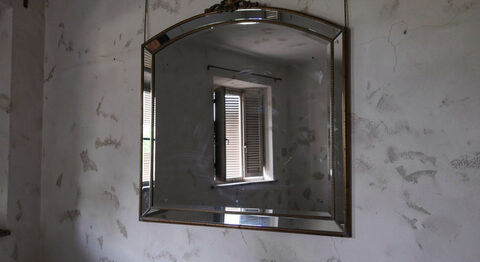
How a dark disc of polished stone became a clear silvered pane, and why Venice and its island of Murano led the trade for two centuries.
 02
02Craft and Making
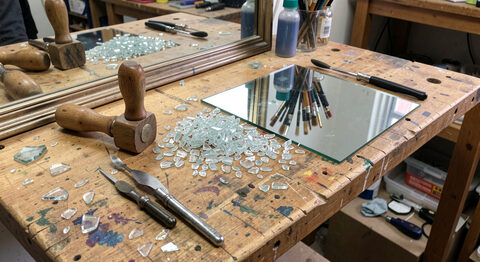
The bench, the tools and the order of the work: cutting, bevelling, faceting, engraving, silvering and assembly, with no step left to chance.
 03
03Styles and Forms
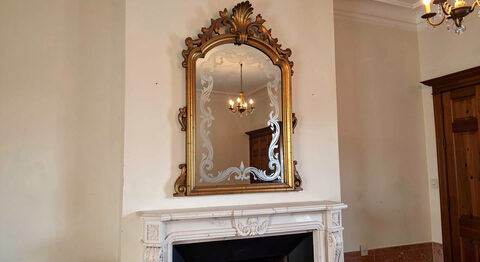
The family of shapes the tradition produced, from the crowned overmantel and the crest to the oval, the bubble frame and mirrored furniture.
 04
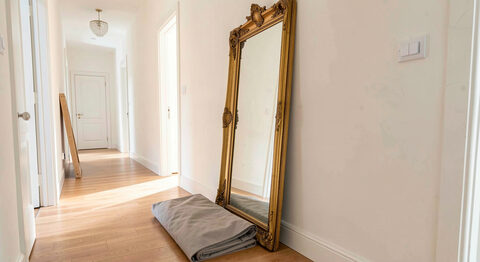
04Care and Ownership
The practical side of a glass framed mirror: reading a size, choosing a wall, cleaning without damage, moving, packing and storing it safely.
Section 1 of 4
History and Origins
How a dark disc of polished stone became a clear silvered pane, and why Venice and its island of Murano led the trade for two centuries.
History and Origins
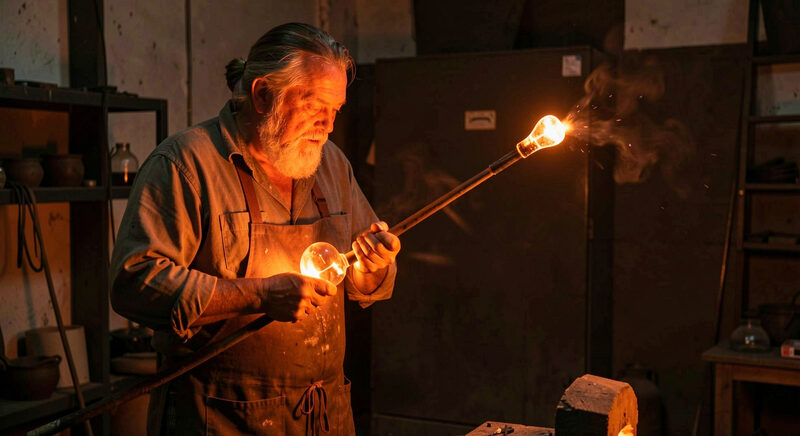
Murano Glass and the Mirror Makers
Why the glass furnaces moved to Murano, how cristallo was made, and how the island guild rules shaped the mirror trade for two hundred years.
Cristallo, the guild and the rules that kept the mirror on one island.
Section 2 of 4
Craft and Making
The bench, the tools and the order of the work: cutting, bevelling, faceting, engraving, silvering and assembly, with no step left to chance.
Craft and Making
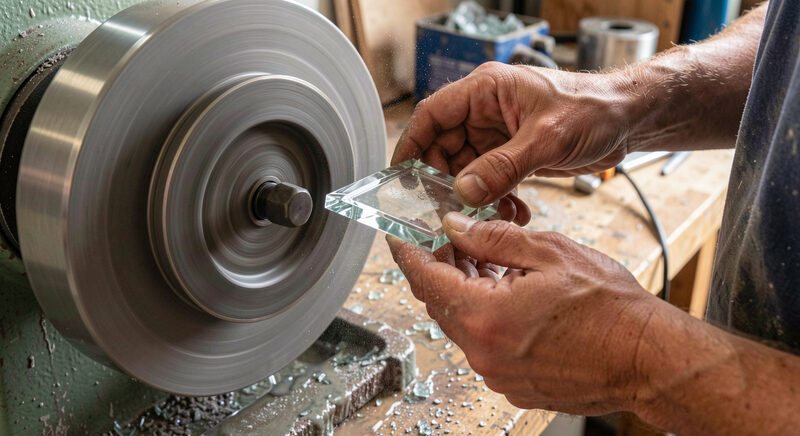
How a Venetian Mirror Is Made
From cutting and bevelling to faceting, engraving and silvering, a plain account of the stages an artisan works through to finish a mirror.
Eleven stages, from the template on paper to the inspection in daylight.
Craft and Making
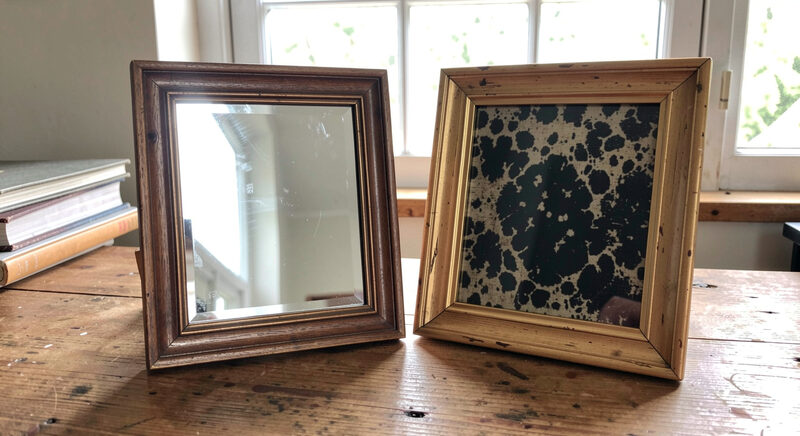
Silvered and Antique Finishes
What separates a bright silvered finish from an antique one, how colour enters the glass, and how each finish ages in a real room over the years.
Bright silvering, deliberate patina and colour in the glass.
From the archive
Articles at addresses this domain published before
This domain carried a Venetian mirror workshop for many years. These articles answer the questions those pages answered, at the same addresses, under this magazine's own name.
Restored address
The Venetian Mirror
Why the frame itself is made of glass, and what to look at first.
Restored address
Murano Style Mirrors
Coloured glass, gold leaf and applied flowers in the frame.
Restored address
Bubble Mirrors
A border of blown domes that gathers light into points.
Restored address
Mirrored Furniture
Consoles, stools and cupboards faced in mirror glass.
Restored address
Packing and Shipping
Five stages, and why a mirror must travel upright.
Section 3 of 4
Styles and Forms
The family of shapes the tradition produced, from the crowned overmantel and the crest to the oval, the bubble frame and mirrored furniture.
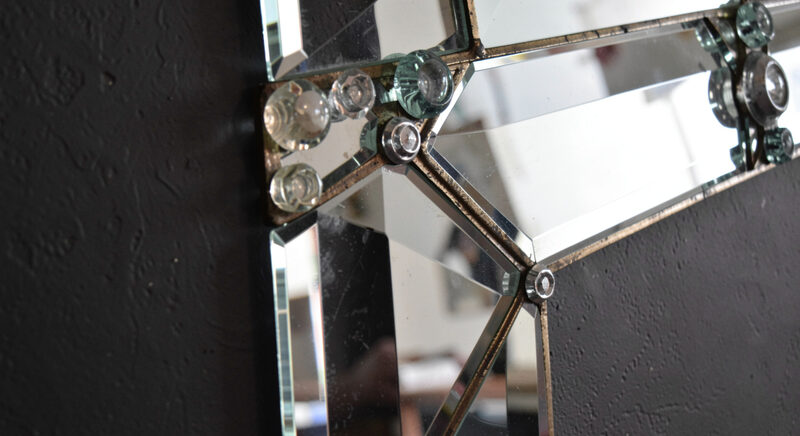
Styles and Forms
The Venetian Mirror
Why the Venetian mirror is built as a frame of glass rather than wood, how the bevelled border throws light, and what to look at first.
Why the frame itself is made of glass, and what to look at first.
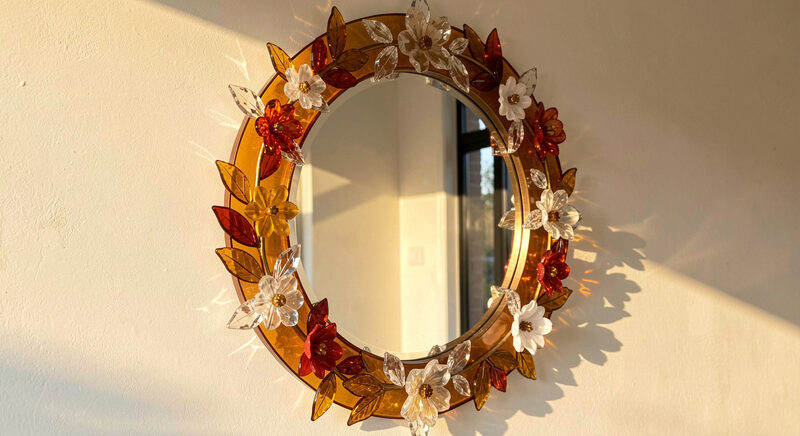
Styles and Forms
Murano Style Mirrors
How Murano style mirrors use coloured and crystal glass, gold leaf and applied flowers, and how they differ from a classic Venetian mirror.
Coloured glass, gold leaf and applied flowers in the frame.
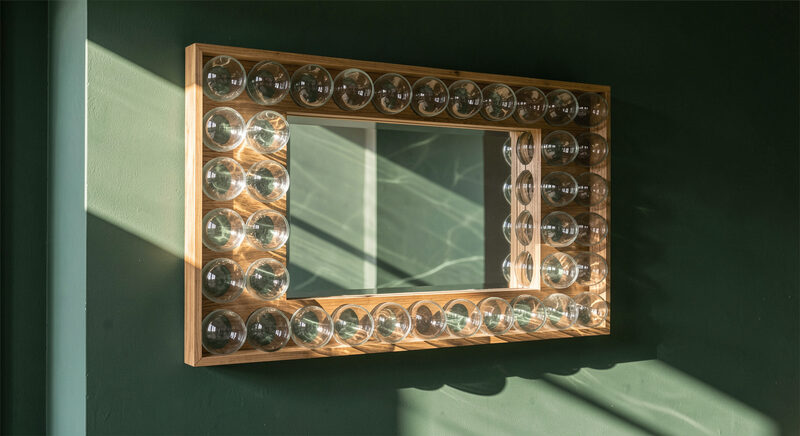
Styles and Forms
Bubble Mirrors
The bubble mirror is built from glass domes and discs, a later reading of the Venetian frame that changes shape with the angle of the light.
A border of blown domes that gathers light into points.
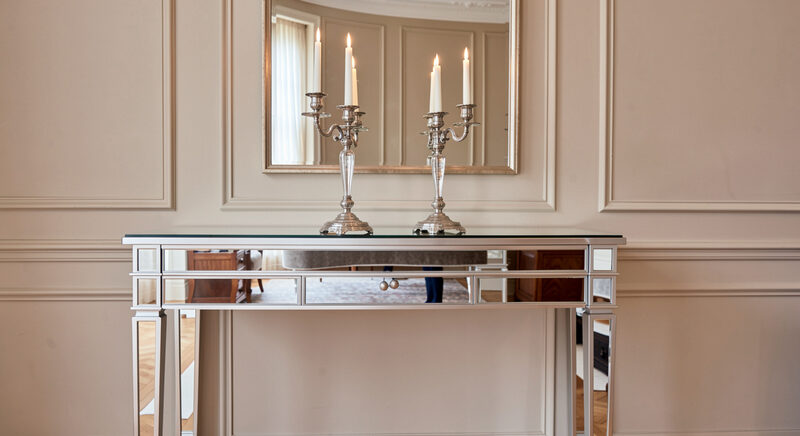
Styles and Forms
Mirrored Furniture
Console tables, stools, chairs and cupboards faced in mirror glass, the furniture that grew out of the Venetian mirror workshop and its offcuts.
Consoles, stools and cupboards faced in mirror glass.
Sources and further reading
Where the detail in these articles comes from
The Silvered Pane is written from public sources, and each article names the one it leans on. These are the museum, conservation and reference resources used most often, gathered here so that a reader can go straight to the evidence.
Outside this site
Cabinet magazine: A Short History of the Glass Mirror
A dated essay following the mirror from obsidian to the Murano cristallo and the tin and mercury amalgam.
From polished stone to silvered glass.
Outside this site
Cooper Hewitt: Reflections on Light
The Smithsonian design museum on how a pane becomes a mirror, and why the metallic coating matters.
How glass becomes reflective.
Outside this site
Cooper Hewitt: Conserving Silver-Leaf Mirrors
A conservator on stabilising a failing reflective layer, with reversible treatments and no re silvering.
Conservation, not restoration.
Outside this site
Historic Mercury Amalgam Mirrors
A conservation paper on how historic mirrors were made, how the amalgam deteriorates and how to handle them.
The chemistry of an ageing mirror.
Outside this site
Murano glass
The furnaces, the families of makers, the guild rules and the techniques behind the mirror frame.
The island that made the glass.
Outside this site
Venetian glass
An overview of the Venetian glass tradition and the decorative vocabulary shared by mirrors and vessels.
One workshop, many objects.
Section 4 of 4
Care and Ownership
The practical side of a glass framed mirror: reading a size, choosing a wall, cleaning without damage, moving, packing and storing it safely.
Care and Ownership
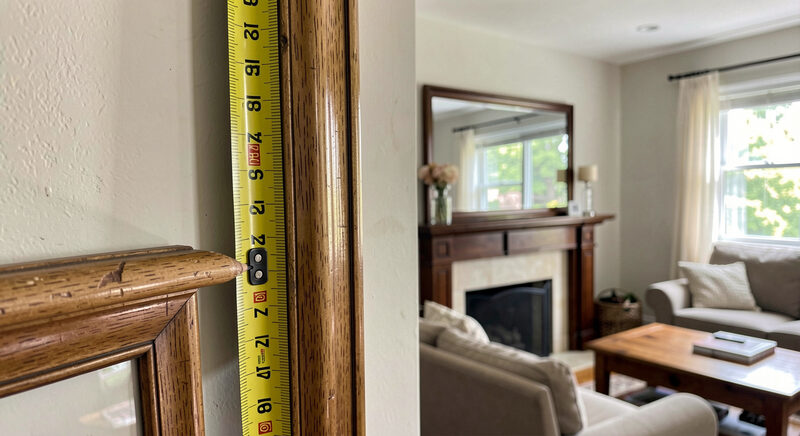
Sizes and Placement
How to read the height and width of a Venetian mirror, where each size belongs, and how to check a wall before you hang a heavy glass frame.
Reading a size, choosing a wall, fixing it safely.
Care and Ownership
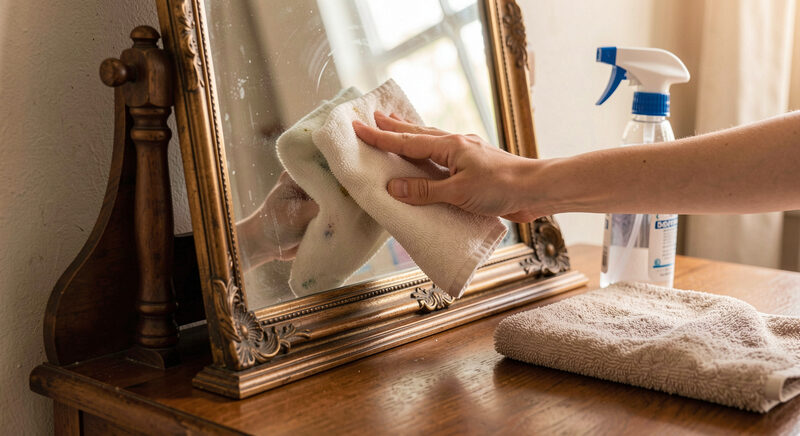
Cleaning and Caring for a Mirror
Cleaning a silvered or antique mirror without lifting the finish: what to use on the glass, what to keep away from the edges, and how to dry it.
Dust, a barely damp cloth, and a dry finish every time.
Care and Ownership
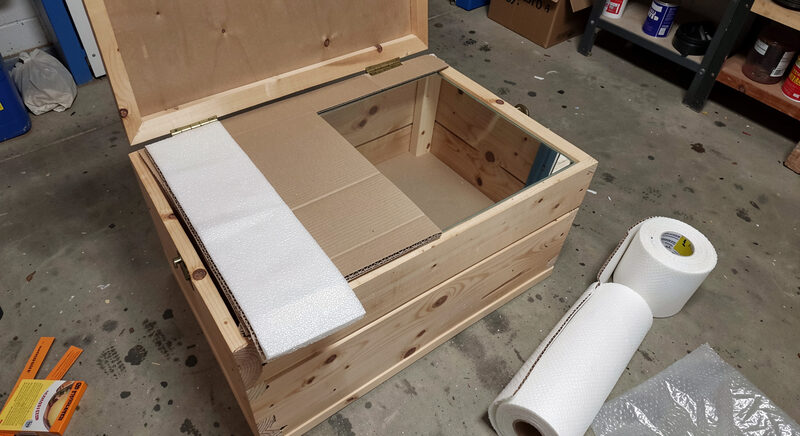
Packing and Shipping
How a glass framed mirror is packed in stages, why the corners matter most, and what a buyer should check when the crate is finally opened.
Five stages, and why a mirror must travel upright.
The pane in pictures
Five views from the guides
Five photographs from the articles below, each with the page that explains the scene in full.
Field note 1
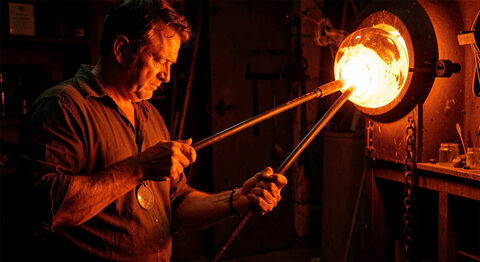
The furnace that made the mirror possible
Murano glass, the cristallo recipe and the guild that kept the secret on the island.
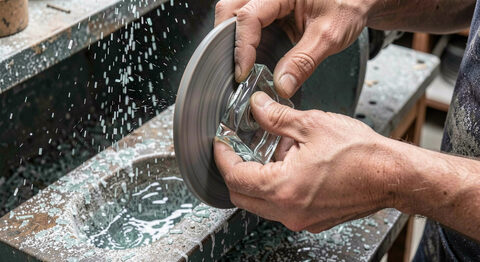
Field note 2
Cut, bevelled, engraved, silvered
The order of the stages, and why reversing two of them breaks the piece.
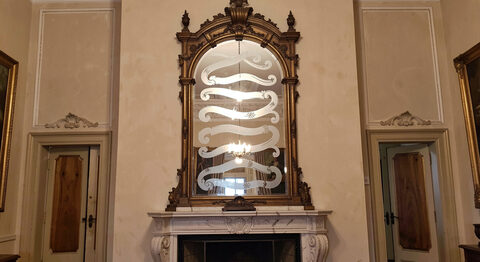
Field note 3
From the crowned overmantel to the oval
The main shapes of the Venetian mirror and the names used for each of them.
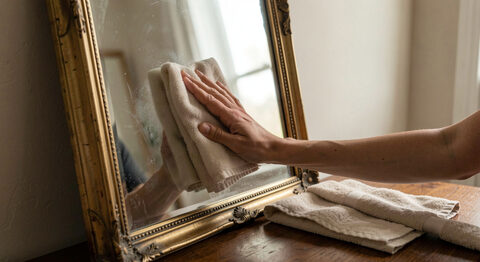
Field note 4
A slower, drier way to clean glass
What to use on the pane, and what to keep away from the edges of the frame.
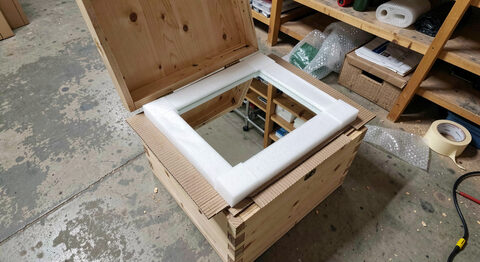
Field note 5
Packing a mirror in five stages
Face, corners, frame, case, upright transport, and what the receiver should check.