Care and Ownership
Living With a Venetian Mirror
Practical notes for owners: where to hang a heavy glass frame, how to clean silvered and antique glass, and how to move, pack or store a mirror.
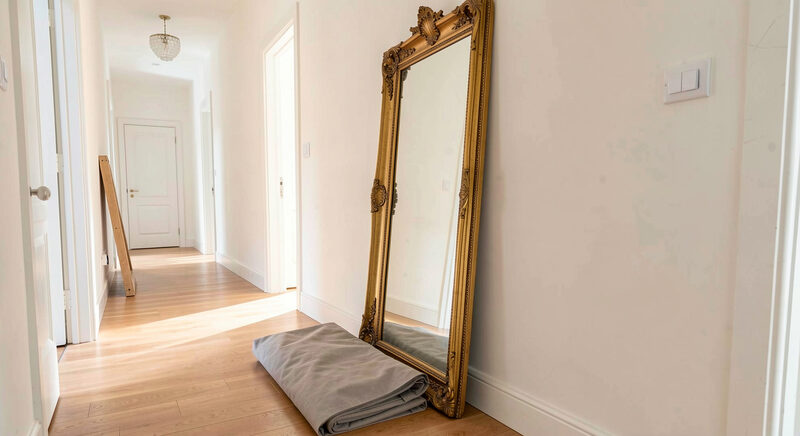
Buying a Venetian mirror is the easy part. Living with one is where owners run into questions, because a glass framed mirror behaves unlike almost anything else in a house: it is heavy, it is fragile at the edges, it dislikes moisture, and it cannot be repaired in the way that a piece of furniture or a picture can. This section gathers the practical side of ownership, from choosing a size and a wall to cleaning, moving, packing and storing a mirror safely.
Start with the wall, not the mirror
The most common mistake is to fall for a mirror and then look for somewhere to hang it. A large Venetian mirror needs a wall that can take its weight, a vertical line to sit on, and enough room around it for the frame to be seen. Before buying, measure the intended space, check what the wall is made of, and find out where the studs or the solid masonry are. A mirror hung on plasterboard alone, with a single hook, is a mirror waiting to fall. The measurements and the fixings are set out in the article on sizes and placement.
Weight and the fixing
Glass is heavy, and a Venetian frame is mostly glass. A tall crowned mirror can weigh as much as a small wardrobe, and the crown puts much of that weight at the top, which pulls the mirror away from the wall. The safe approach for anything large is a batten fixed across two studs, with the mirror hung on the batten and, where possible, secured at the bottom as well so that it cannot swing. For a heavy piece it is worth asking a professional to hang it, and worth telling the person who hangs it exactly what the mirror weighs.
Humidity, sunlight and siting
A mirror ages fastest at the edges, where moisture can reach the reflective backing. Hanging a mirror on a cold external wall, above a radiator, beside a steamy bathroom, or in a room that is regularly damp will speed up the spotting and lifting described in the article on finishes. Direct sunlight is gentler but not harmless: over years it fades the backing and can discolour a gilded frame. The best position is a dry interior wall, out of the line of steam and spray, with light arriving from the side rather than full sun on the glass.
Cleaning without damage
Cleaning a Venetian mirror is mostly about what not to do. Spray cleaner directly onto the glass and it will run down into the frame and behind the edges, which is exactly where the backing is most vulnerable. Soak the applied flowers or the bubbles and the adhesive and the glass can suffer. The safe routine is a soft, barely damp cloth on the flat glass, a dry cloth to finish, and a soft brush for the ornament. The full method is in the article on cleaning and caring for a mirror.
Moving a mirror in the house
When a mirror is moved, even a short distance, the danger is the edge and the ornament. Take the mirror off the wall with two people, holding the frame rather than the glass, and keep it upright. Never lift a large mirror by the top rail or the crown, and never lay a Venetian mirror face down on a hard surface, because the weight of the frame will press on the glass and the applied pieces. If it must be laid down, put it face up on a padded surface with the frame supported so that no single element carries the load.
Packing and shipping
If a mirror is to travel, whether to a new house or to a buyer, it needs staged packing: protection on the glass, reinforcement at the corners, a rigid outer case, and clear marking so that no one lays it flat in transit. The method is described in the article on packing and shipping, and it is worth following even for a short journey, because most mirror damage happens in the last few metres rather than the first few hundred miles.
Storage
A mirror in storage should stand upright, not lie flat, on a padded surface, with the frame supported and nothing pressing on the glass. It should be off a concrete floor and away from damp, wrapped so that dust cannot settle in the engraving, and, for a long period, checked occasionally for any sign of edge damage. Storing a mirror face down, or leaning it against a wall with its weight on one corner, is a reliable way to crack it or to distort the frame.
Insurance and records
Because a Venetian mirror is difficult to replace and expensive to repair, it is worth keeping a simple record: photographs from the front and the back, the dimensions, the weight, and a note of any existing damage or patina. This helps with insurance, with any future sale, and with any conservation work, since a restorer will want to know what was there before. A short written record takes a few minutes and can save a great deal of argument later.
Where to go next
The three articles in this section cover the ground in detail: sizes and placement, cleaning and care, and packing and shipping. The construction of the mirror itself, which explains why it behaves as it does, is set out in the guide to the Venetian mirror. For conservation principles applied to historic mirrors, the Smithsonian design museum's account of conserving silver leaf mirrors is a useful reference: Conserving Silver-Leaf Mirrors.
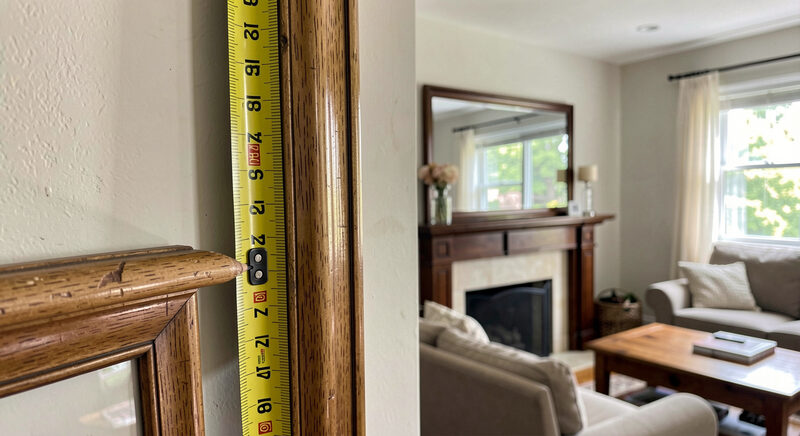
Care and Ownership
Sizes and Placement
How to read the height and width of a Venetian mirror, where each size belongs, and how to check a wall before you hang a heavy glass frame.
Reading a size, choosing a wall, fixing it safely.
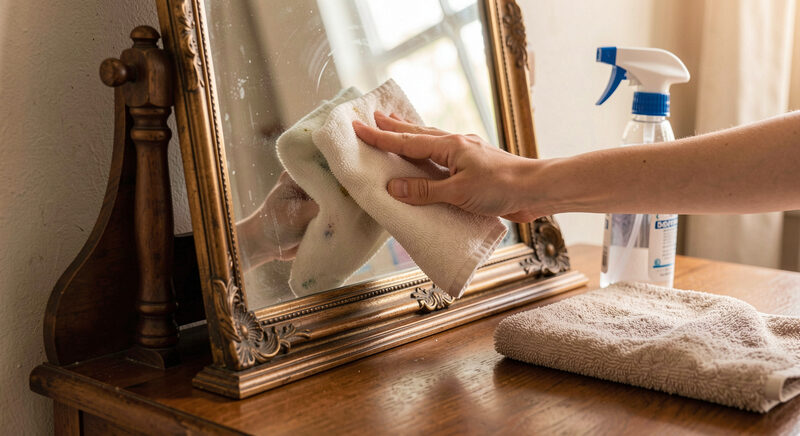
Care and Ownership
Cleaning and Caring for a Mirror
Cleaning a silvered or antique mirror without lifting the finish: what to use on the glass, what to keep away from the edges, and how to dry it.
Dust, a barely damp cloth, and a dry finish every time.
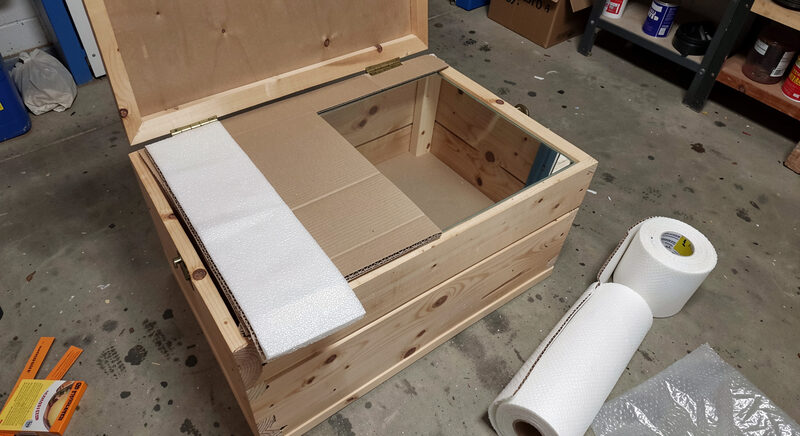
Care and Ownership
Packing and Shipping
How a glass framed mirror is packed in stages, why the corners matter most, and what a buyer should check when the crate is finally opened.
Five stages, and why a mirror must travel upright.